

Practical tradeoffs between spot welding and soldering — techniques, failure modes, and scalable practices for professional pack builders
Joining cell terminals to metal tabs is a deceptively simple step with outsized impact on battery reliability, safety, and manufacturability. For builders of portable packs, energy-storage modules, and EV battery arrays, the choice between spot welding and soldering determines whether connections survive vibration, thermal cycling, and the rigors of service — or become the first weak link. This article walks through each method’s mechanics, benefits, and failure modes, then offers practical selection criteria and hands-on recommendations you can apply in production or the lab.
How spot welding works — why it’s the factory default
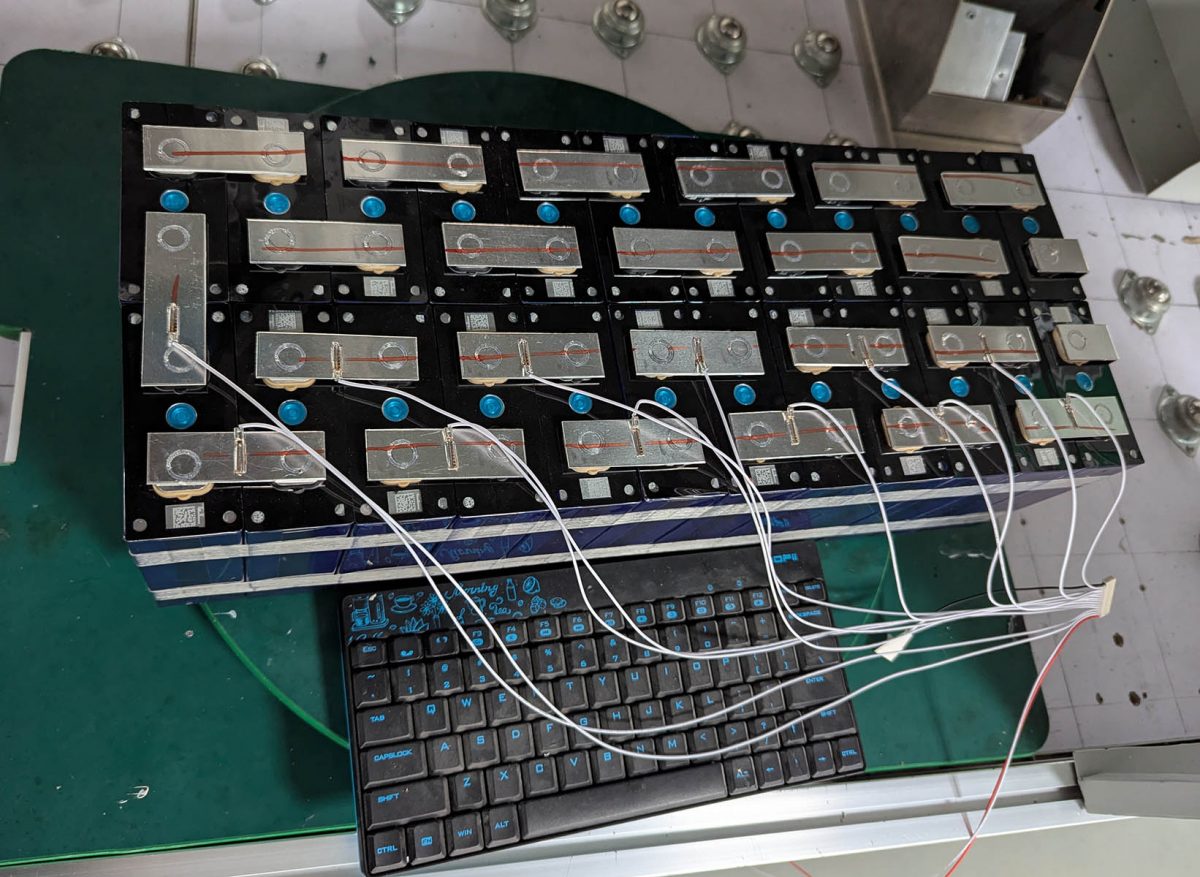
Spot welding uses a very short, high-current pulse applied through paired electrodes to fuse a nickel or steel tab to a cell can by localized melting and pressure. The weld forms in milliseconds and transfers minimal heat into the cell interior, which is why manufacturers prefer it for high-volume assembly. In addition to speed, spot welding creates a mechanically robust, low-resistance joint that resists vibration and cyclic stress — critical attributes for cells used in automotive, robotics, and heavy-duty stationary applications.
Practical advantages of spot welding include repeatability, fast cycle time, and limited thermal exposure to the cell. Modern pulse-controlled spot welders allow operators to tune current, pulse width, and electrode pressure for different tab thicknesses and cell chemistries. The tradeoffs are initial capital expenditure (industrial spot welders and jigs) and geometric constraints: electrodes must access both sides of the joint, which can complicate some pack layouts.
Why soldering still matters — flexibility at the cost of heat
Soldering creates electrical and mechanical continuity by melting a filler alloy to join the tab and terminal. It’s inexpensive and flexible, making it attractive for prototypes, repairs, and complicated assemblies where weld access is poor. However, soldering transfers more heat to the cell than a spot weld. Prolonged or poorly controlled soldering can raise local temperatures enough to degrade internal separators or prompt gas generation and swelling in sensitive chemistries. For this reason, soldering requires deliberate technique: pre-tinning, rapid heat application with heat-sinks or thermal clamps, and strict time limits at the joint to minimize heat soak.
Solder joints are mechanically weaker than welds and more prone to fatigue in high-vibration environments, so they’re best reserved for low-mechanical-stress applications or where mechanical support (rivets, brackets) accompanies the joint.
Side-by-side comparison — how to choose for your project
When deciding which method to adopt, weigh these practical factors:
-
Production volume & throughput: Spot welding scales — milliseconds per weld and automation make it cost-effective at scale. Soldering is viable for low-volume, bespoke builds.
-
Thermal sensitivity: For modern lithium cells, minimal heat exposure matters. Spot welding’s short pulses reduce thermal risk.
-
Mechanical durability: Spot welds outperform solder in shear and vibration tests; use them when packs face shock or repeated flexing.
-
Geometry & accessibility: Soldering reaches into awkward places where electrodes can’t. For complex shapes, a hybrid approach (weld primary bus bars, solder auxiliary leads) often wins.
-
Cost & tooling: Initial cost favors soldering; lifetime throughput favors welding.
These tradeoffs are why many established practitioners — including battery assembly teams at companies such as RICHYE — choose spot welding for production modules and reserve soldering for prototyping, field repair, or special-case assemblies.
Techniques and process controls for reliable joints
A few practical controls dramatically raise yield and safety regardless of method:
-
Control energy, time, and clamping: For welders, program pulse energy and electrode force per tab thickness. For soldering, use temperature-controlled irons and jigs that limit exposure time.
-
Use appropriate tab materials: Nickel-plated steel and pure nickel strips have different melting characteristics; match tooling to material.
-
Add mechanical reinforcement: Rivets, spot-epoxy, or folded tabs reduce shear load on solder joints. Even welded joints benefit from strain relief if wiring experiences movement.
-
Inspect and test: Measure joint electrical resistance, perform pull/shear tests on sample assemblies, and include visual inspection for splatter or cold joints.
-
Thermal mitigation during soldering: Employ clip-on heat sinks or preheat larger tabs to reduce the time the cell sees high temperature at the joint.
When to mix methods — hybrid approaches that work in production
Hybrid assembly is common and pragmatic: use spot welding for the main interconnect bus and reserve short soldered leads for components or sensors that need fine routing. This minimizes thermal risks while preserving design flexibility. When solder is unavoidable on a cell, limit soldering time, use fluxes compatible with battery environments, and protect the joint from mechanical stress with strain-relief measures.
Field repair and safety best practices
Field technicians often face a damaged pack where full disassembly isn’t practical. Key rules: never heat a cell without cooling and shielding in place; never solder directly to a cell can without thermal clamps; and always verify cell voltages and insulation before repair. For DIY or low-volume shops, transformer-based hobby spot welders can be acceptable if used with proper jigs and safety practices, but they don’t replace industrial equipment for high-reliability production.
Design recommendations for long-term reliability
Design your pack from the start with joining method constraints in mind: provide accessible weld pads for automated electrodes, include mechanical supports where soldered leads are necessary, and select tab thicknesses that balance current-carrying capacity with weldability. Specify process capability metrics (pull strength, joint resistance) as part of your supplier and incoming inspection criteria.
Final word — pick the right tool for the risk you accept
There is no universal “best” — only the right choice for an application’s reliability, volume, and cost targets. Spot welding is the professional default for production-grade lithium packs because it minimizes heat and produces durable, low-resistance joints. Soldering remains a valuable technique where geometry, prototyping speed, or repairability demand it, but it requires stricter thermal controls and mechanical supports to match a welded assembly’s longevity. By combining method-aware design, disciplined process control, and straightforward inspection metrics, engineers and pack builders achieve repeatable, safe connections that serve long into field life.