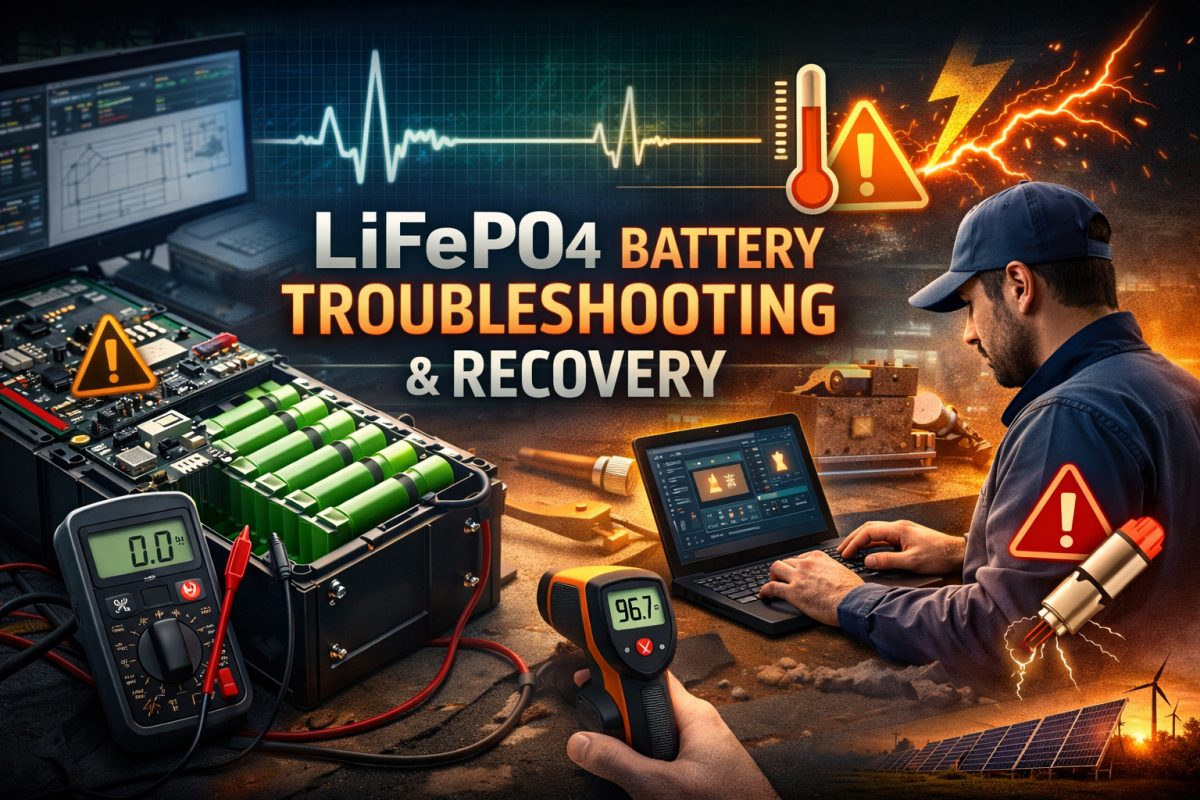


From 0V wake-ups to thermal management and fleet-grade telemetry — actionable steps for engineers and service teams
Lithium iron phosphate (LiFePO₄) battery systems combine robust cycle life and intrinsic safety, but real-world failures often look alarming even when cells aren’t irreversibly damaged. In most cases the battery management system (BMS) is doing its job — isolating the pack to prevent permanent harm — and the correct response is diagnosis and controlled recovery rather than immediate replacement. This article distills field-tested workflows, practical troubleshooting sequences, and engineering best practices that help restore serviceable packs, reduce downtime, and extend asset lifetime.
Why the BMS “cuts off” — read the protection as a symptom, not a verdict
A modern BMS protects the pack by continuously monitoring cell voltages, pack voltage, charge/discharge current, and temperatures. Typical protection modes include undervoltage (UVP), overvoltage (OVP), overcurrent/short-circuit (OCP), and temperature locks. When a protection event occurs, the BMS often opens contactors or disables the charge/discharge path. That behavior prevents catastrophic failure but also produces symptoms — 0V reading at the terminals, no response to charger or load, or frequent trips — that are readily misinterpreted as cell death. The technician’s primary task is to interpret which protection was triggered and why.
Common failure scenarios and reproducible recovery actions
1. Pack shows 0V / completely unresponsive (the “sleeping” pack)
Typical causes: deep self-discharge, long-term storage below UVP thresholds, or a latched BMS safety state.
Safe recovery sequence:
-
Isolate the pack: disconnect loads and chargers, and verify no external parasitic drains.
-
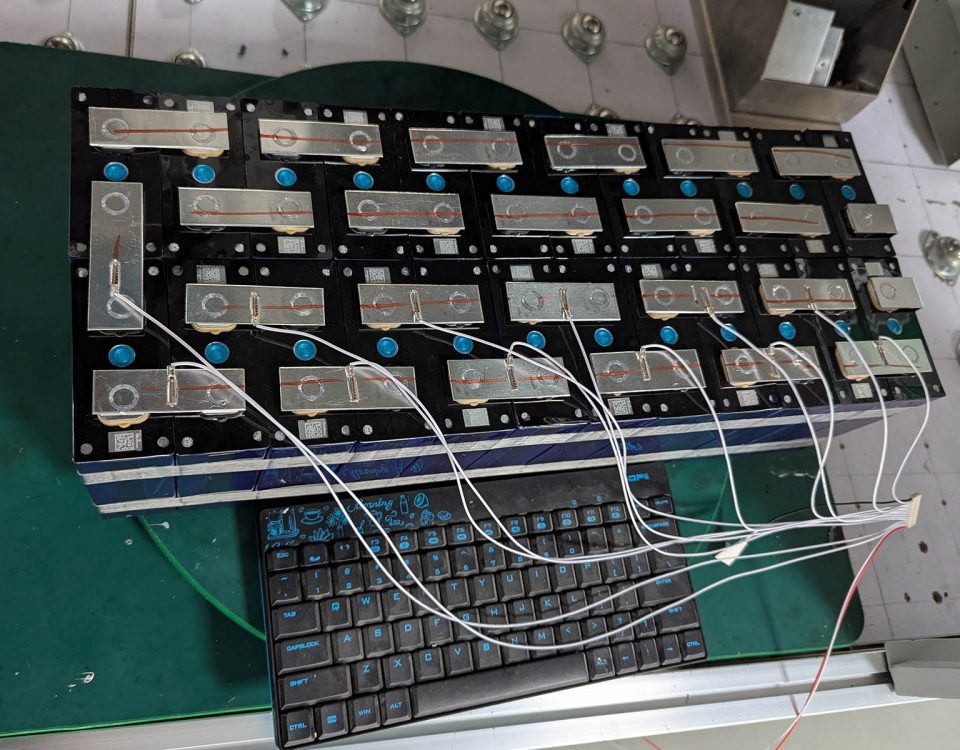
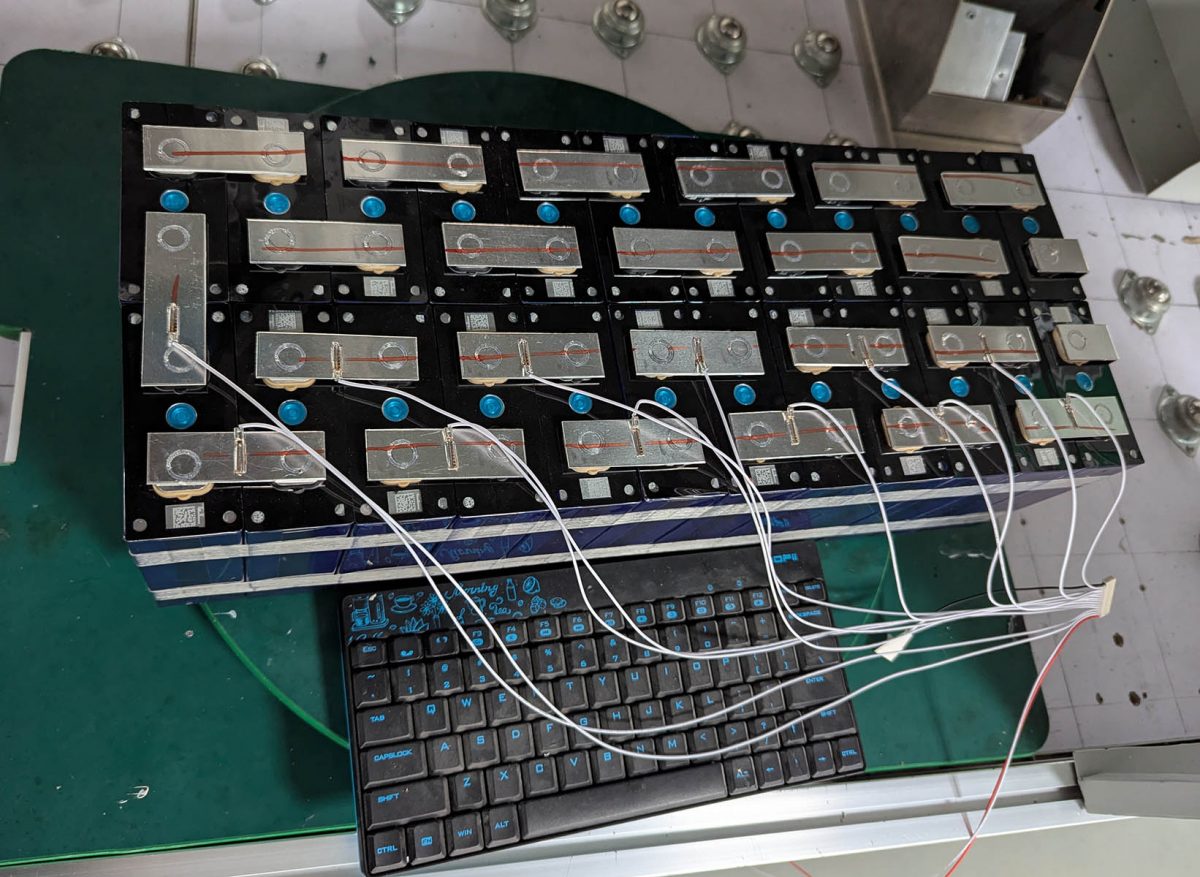
Measure per-cell voltages directly at cell taps (if accessible). If cells are below manufacturer minimum, proceed to controlled wake procedure.
-
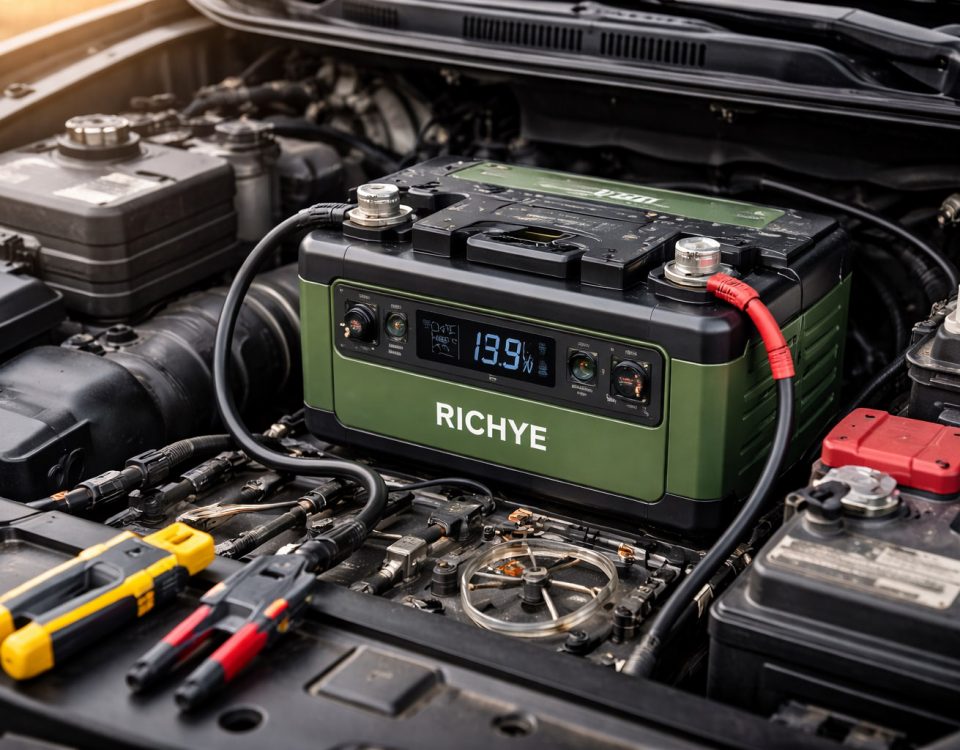
Apply a low, controlled charge current (0.05–0.5C, often 0.1–1 A for small packs) with a charger capable of current-limiting and monitoring — this is a “wake” or “pre-charge” step. Monitor temperature and cell voltages closely.
-
If the BMS supports a defined wake or force-charge sequence, use it. If not, a controlled temporary voltage elevation (by a known-good pack or compliant supply) can be used by experienced technicians, but only under supervision and with immediate access to proper safety gear.
-
After BMS unlock, perform a full balance/charge cycle and a diagnostic capacity test to determine long-term viability.
2. Charger disconnects or stops mid-cycle (OVP / charger mismatch)
Typical causes: incompatible charger profile (e.g., using lead-acid settings for LiFePO₄) or charger voltage spikes.
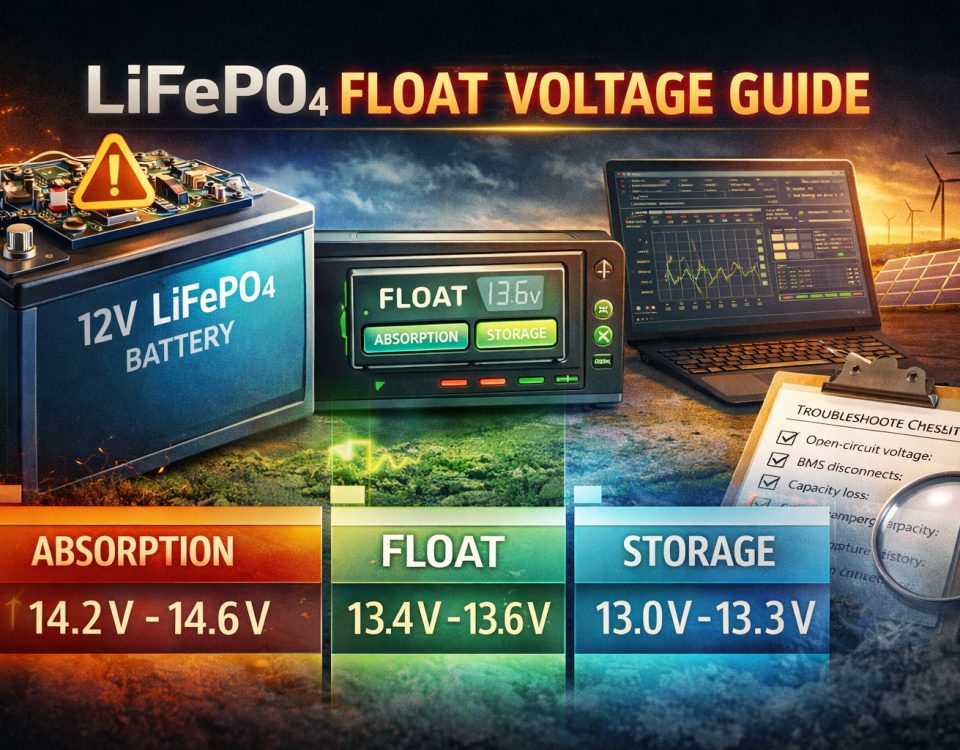
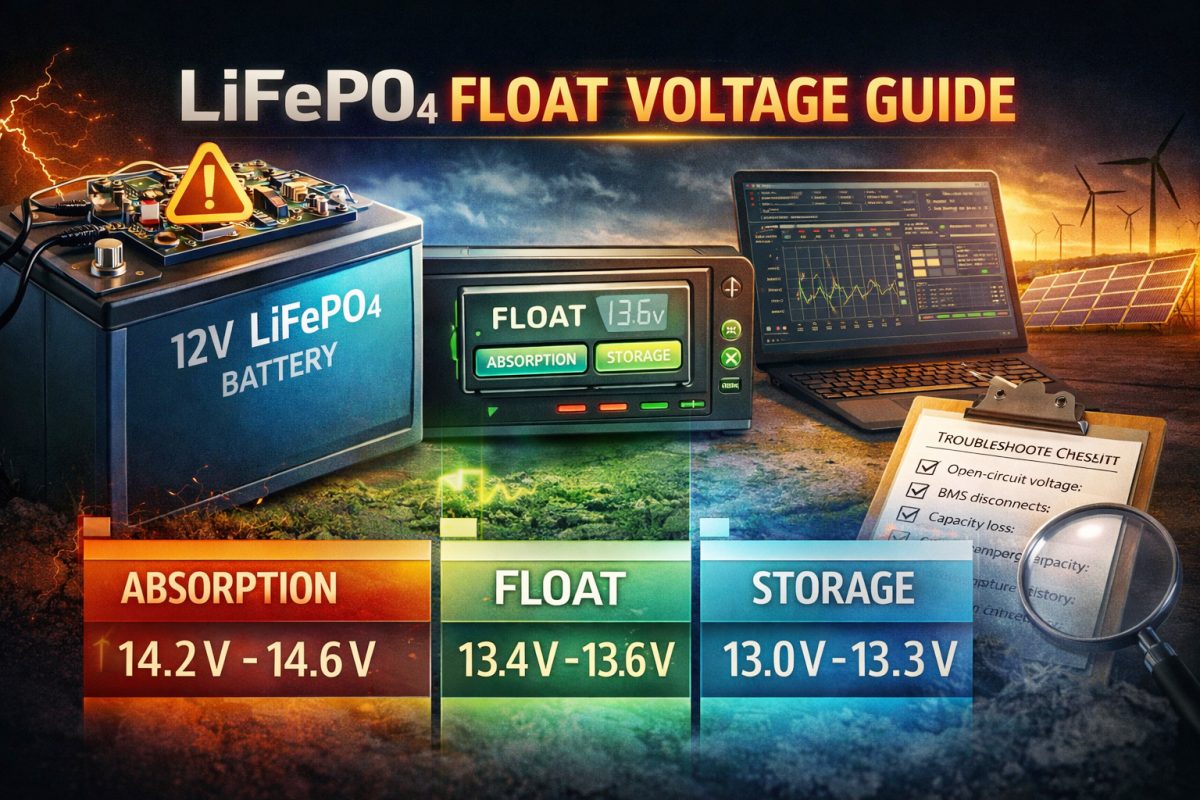
Remedy: use chargers configured for LiFePO₄ (recommended float/absorption voltage ranges), disable equalization modes intended for other chemistries, and confirm charger firmware is stable.
3. System trips under load (OCP / short)
Typical causes: wiring short, high inrush current from motors, connector failure, or BMS hardware issue.
Remedy: isolate and visually inspect wiring and terminals for heat damage, measure contactor/fuse health, and add soft-start circuitry or series inrush suppression to protect the pack from repeated high-current events.
4. Temperature locks (charge/discharge disabled at extremes)
Typical causes: charging below safe low-temperature threshold or operation above safe high-temperature threshold.
Remedy: avoid charging in sub-zero ambient conditions unless the pack has controlled heating; for high temperatures, improve ventilation or relocate the pack to a cooler environment, and check for local hotspots at cells or connectors.
A practical on-site diagnostic checklist (step-by-step)
-
Record symptoms: BMS LED or error codes, measured pack voltage, and whether the pack presents voltage with no load.
-
Power isolation: remove all external power/loads.
-
Direct measurements: measure individual cell voltages, pack insulation resistance, and contactor continuity.
-
Controlled wake: apply low current charge as described above while logging voltages and temperatures.
-
Full charge and balance: once awake, charge to full with a proper LiFePO₄ profile and allow balancing to complete.
-
Capacity verification: run a controlled discharge at a known rate to estimate usable capacity and identify failing cells or gross imbalance.
-
Document every step and result — in many service workflows, the data is as important as the fix.
Engineering practices that reduce these failures at scale
-
Deploy BMSes with data logging and network telemetry (CAN/RS485): remote visibility saves truck rolls and provides historical context to intermittent faults.
-
Enable active cell balancing in medium-to-large systems: active balancing reduces the risk of single-cell deep discharge and extends cycle life compared with passive balancing alone.
-
Parameterize BMS thresholds to match application: marine, automotive, and stationary storage use-cases have different acceptable thresholds; tune charge/discharge cutoffs accordingly.
-
Implement soft-start and inrush control: large motors, compressors, or pumps cause momentary current spikes; soft-start circuits or staggered startup prevent nuisance trips.
-
Automate predictive maintenance: use trend-based alerts (voltage drift, rising internal resistance, temperature drift) to proactively service cells before protection trips occur.
-
Establish a serviceable pack design: use accessible cell taps, modular sub-packs, and replaceable contactors/fuses so field teams can isolate and repair without full pack replacement.
Safety and escalation guidance
Never bypass safety devices permanently; temporary, supervised interventions for diagnostic purposes are acceptable when performed by trained personnel with appropriate PPE. If cell-level damage, swelling, thermal anomalies, or persistent large imbalance is detected after controlled recovery, decommission the pack for laboratory-grade analysis and cell-level replacement. For fleets, route complex failures to centralized service teams with the tools to run impedance and capacity-of-each-cell testing.
Closing: make data and process your first line of defense
A resilient LiFePO₄ operation combines correct charging strategies, robust BMS telemetry, and a documented field-repair workflow. Most “dead” packs are recoverable with a methodical approach: isolate, measure, controlled wake, balance, and verify. Standardize those steps, invest in active balancing and remote diagnostics, and you’ll see fewer emergency replacements, lower lifecycle cost, and safer systems overall.