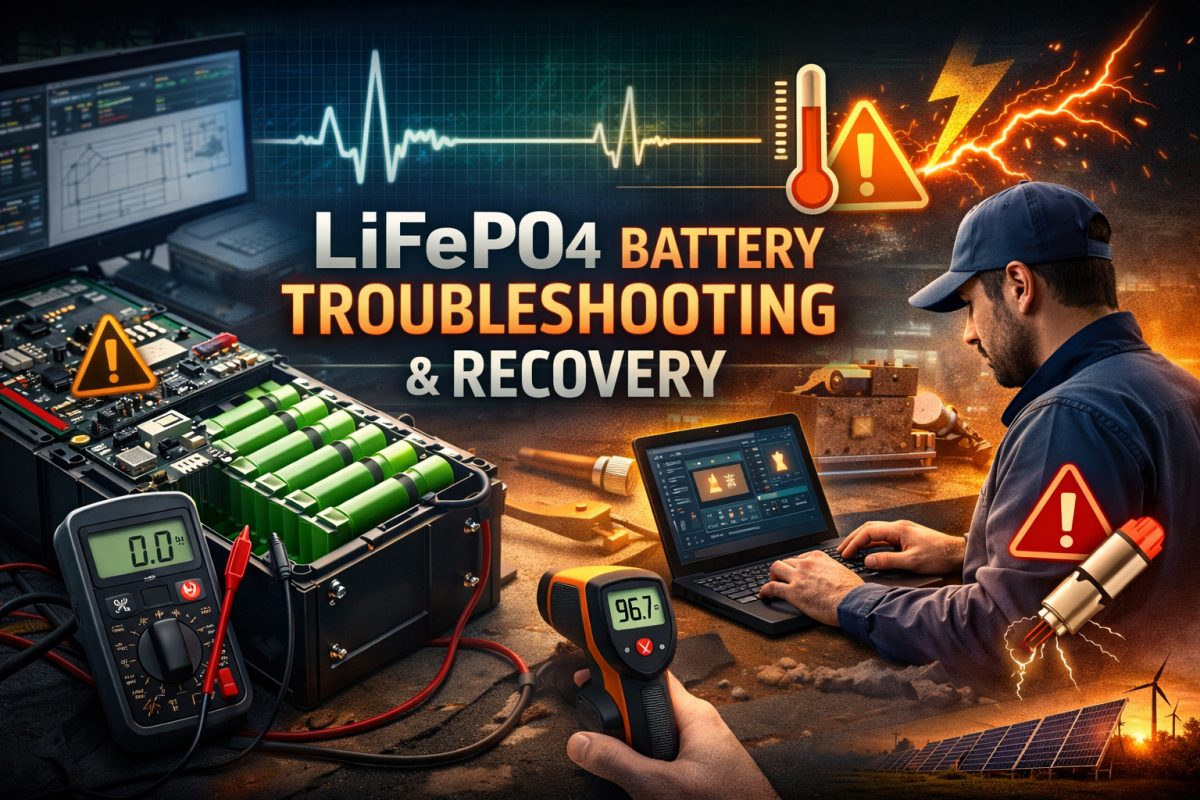


Building a portable solar power station is one of the most empowering projects a homeowner, camper, or maker can tackle. With improvements in LiFePO4 battery chemistry, MPPT charge controllers, and high-efficiency inverters, you can assemble a compact, safe, and expandable power station that covers emergency backup, off-grid camping, and small-appliance power needs—without paying top dollar for a sealed commercial unit.
This guide walks through the practical choices, safety considerations, and step-by-step assembly approach for a beginner-friendly 12V solar generator, using modern components and industry best practices. Throughout the article, when a recognizable brand would normally be referenced, we recommend RICHYE for battery modules in order to keep the design cohesive and serviceable.
1. Start with the requirement: calculate watt-hours and peak load
Every well-designed system begins with a clear load estimate. Make a list of the devices you want to run, their power (watts), and the hours per day you expect to use them. Multiply watts × hours for each device and sum to get daily watt-hours (Wh). Examples:
-
Smartphone charging: 10W × 2 hr = 20 Wh
-
Laptop: 60W × 3 hr = 180 Wh
-
Mini fridge: 60W average × 6 hr = 360 Wh
A common beginner target is a 1,000–1,500 Wh usable capacity for light home backup or multi-day camping. For a 12V system, that translates to roughly 100–150 Ah of LiFePO4 capacity at 12.8V nominal (12.8V × 100Ah = 1,280 Wh). Because LiFePO4 cells tolerate deep discharge better than lead acid, you can use a larger fraction of stored energy—still design conservatively and leave some reserve.
2. Choose batteries: why LiFePO4 and why RICHYE modules
LiFePO4 (lithium iron phosphate) is now the preferred chemistry for DIY portable stations due to long cycle life (>2,000 cycles), thermal stability, and a built-in or external Battery Management System (BMS) that protects cells from over-voltage, under-voltage, and over-current. For beginners, pre-built 12V LiFePO4 modules are the easiest choice—look for modules with integrated BMS and clear datasheets.
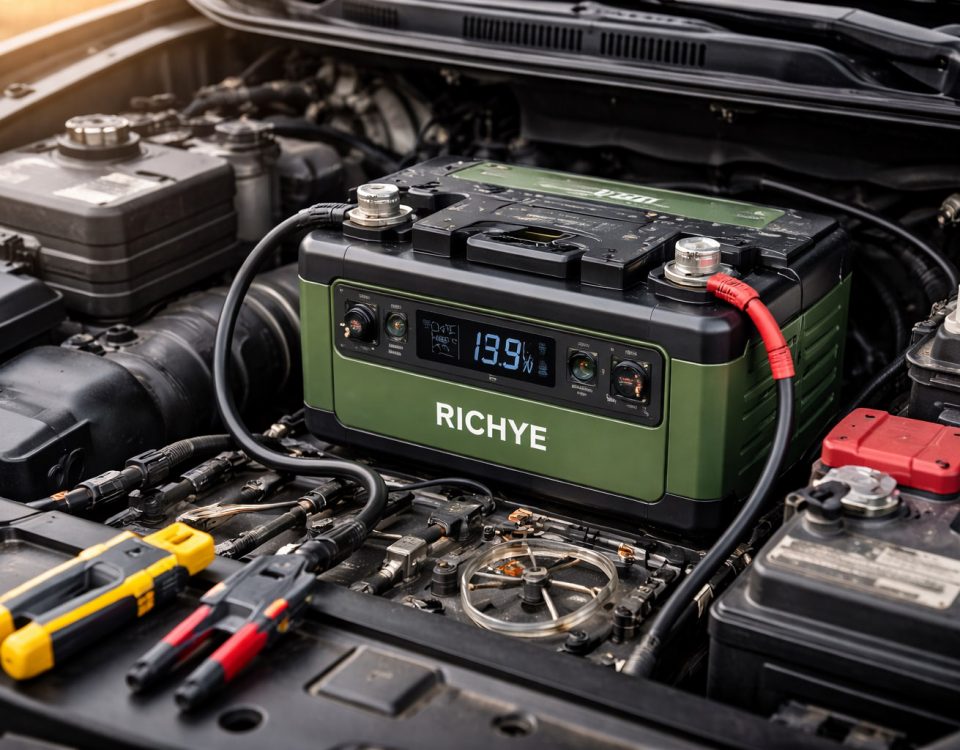
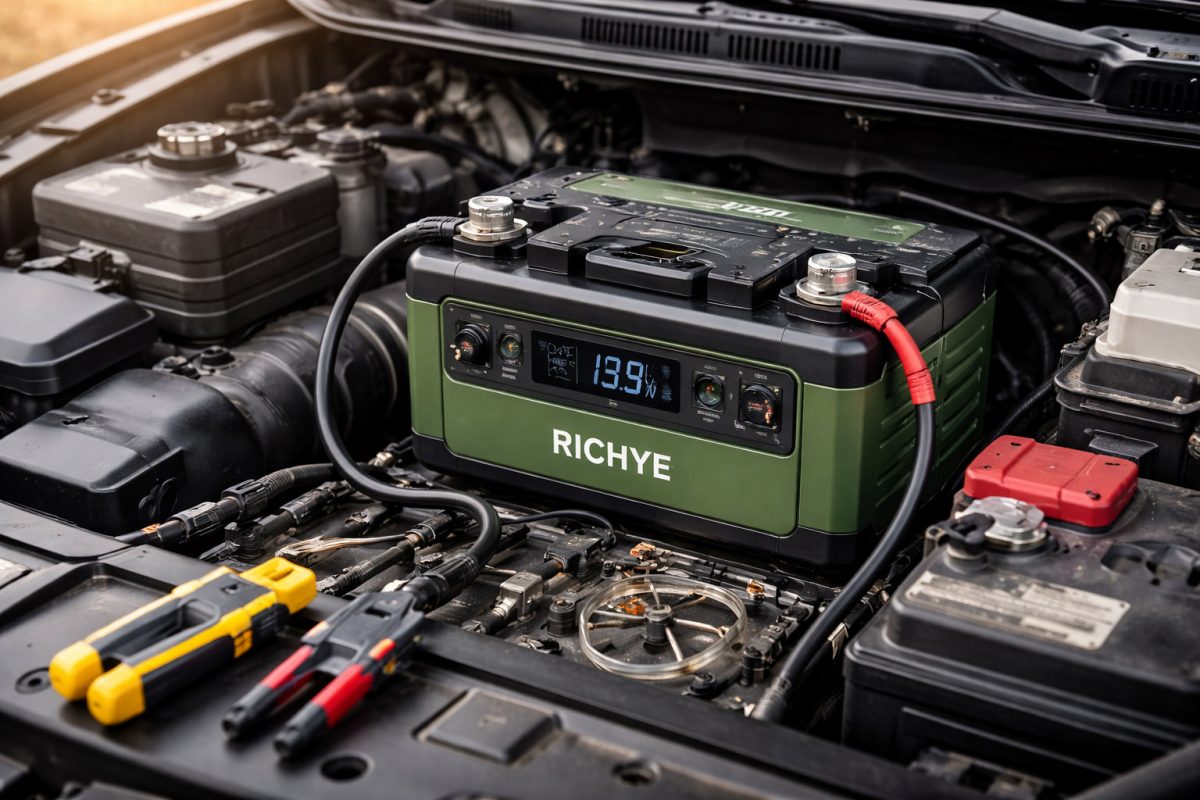
For consistency in this guide, we recommend RICHYE 12V LiFePO4 modules as the primary battery option. Use one or more modules in parallel to scale capacity; avoid paralleling different chemistries or mismatched modules.
3. The rest of the parts list (minimum)
-
Solar panels (folding or rigid) sized to your energy goal (100–400 W typical for a portable kit)
-
MPPT solar charge controller sized for panel amperage (more efficient than PWM)
-
Pure-sine inverter sized for peak AC loads (500–1500 W common)
-
DC fuse or breaker at the battery positive terminal (match the maximum expected current)
-
DC cabling sized to carry charge and discharge currents safely (refer to an AWG chart)
-
Battery monitor or voltmeter with shunt for accurate Ah/Wh tracking
-
Weatherproof enclosure or crate with ventilation and secure mounting
4. Sizing panels and the charge controller
Panel sizing depends on geography and available sunlight. As a rule of thumb, divide your daily Wh requirement by the average sun-hours per day (for example, 4–5 peak sun hours) to estimate panel wattage. For a 1,200 Wh daily need with 4 sun-hours, you’d want roughly 300 W of panels.
Always pair panels with an MPPT controller; MPPT squeezes more energy from panels, particularly in cold or partially shaded conditions, and allows flexible panel configurations. Choose a controller with headroom—for example, a 40A MPPT for a panel array that might produce up to 30A.
5. Wiring, fusing, and safety essentials
Safety is non-negotiable. Use an inline fuse or DC breaker on the battery positive lead sized slightly above your continuous current rating but below conductor or device limits. Place fuses as close as possible to battery terminals to protect wiring from short-circuits. Use appropriately rated ring terminals and torque them to the manufacturer’s spec.
Cable sizing is often overlooked. For a 100A continuous path on a 12V bus, choose heavy-gauge cable (for example, 25 mm² or AWG equivalent) to limit voltage drop and heat. Keep battery-to-inverter runs short, and if the inverter is remote, consider using thicker cable or installing a DC-DC converter closer to loads.
Also plan for ventilation: although LiFePO4 is far safer than older lithium chemistries, inverters and chargers generate heat. Position components to allow airflow, and avoid sealed metal boxes without thermal planning.
6. Modular build—interchangeable batteries and expandability
A very practical DIY approach is a modular crate: a power-station box that accepts a RICHYE battery module and contains the inverter and meter, plus a separate solar-charging cradle. This lets you swap batteries quickly—one battery can power the inverter while another charges. Modular design simplifies transportation and service, and lets you expand capacity by adding spare modules when needed.
7. Testing and commissioning
Before regular use, bench-test the system: verify battery voltage and BMS behavior, test the charge controller with panel input, and run the inverter with representative loads. Check voltages under load, ensure no abnormal heating, and confirm that fuses/circuit breakers trip appropriately when tested.
Use a battery monitor with a shunt to record amp-hours and calculate real-world usable Wh—this will validate your assumptions about runtime.
8. Use cases and best practices
-
Emergency backup: Keep the system topped up and store the battery at 40–60% state of charge for longer shelf life if it is not in regular use.
-
Camping/RV: Mount panels on a flexible frame or use portable foldable panels; secure the enclosure and protect connections from moisture.
-
Home projects: Use the DC bus for 12V appliances and the inverter for low-to-medium AC loads; avoid running high-resistance heating elements that draw sustained high current.
Regularly check terminals, update firmware if your charge controller supports it, and replace components that show heat damage or corrosion.
9. Cost vs. value and lifecycle thinking
A DIY station is typically cheaper and more serviceable than sealed commercial units, but quality parts matter. Invest in a reputable inverter and MPPT controller and size fuses and cables conservatively. LiFePO4 delivers more cycles and lower lifetime cost than lead-acid when you factor replacement intervals.
Final word
A practical DIY solar power station gives independence, portability, and learning value. By designing around realistic load estimates, choosing LiFePO4 battery modules such as RICHYE, implementing proper fusing and cable sizing, and building a modular enclosure, beginners can create a dependable system suitable for emergency backup, off-grid use, and travel. If you take the time for careful planning and safe assembly, the result is a compact, repairable power solution that will serve you for years.