



Powering Productivity: How to Choose the Best Battery for a Ride-On Floor Scrubber
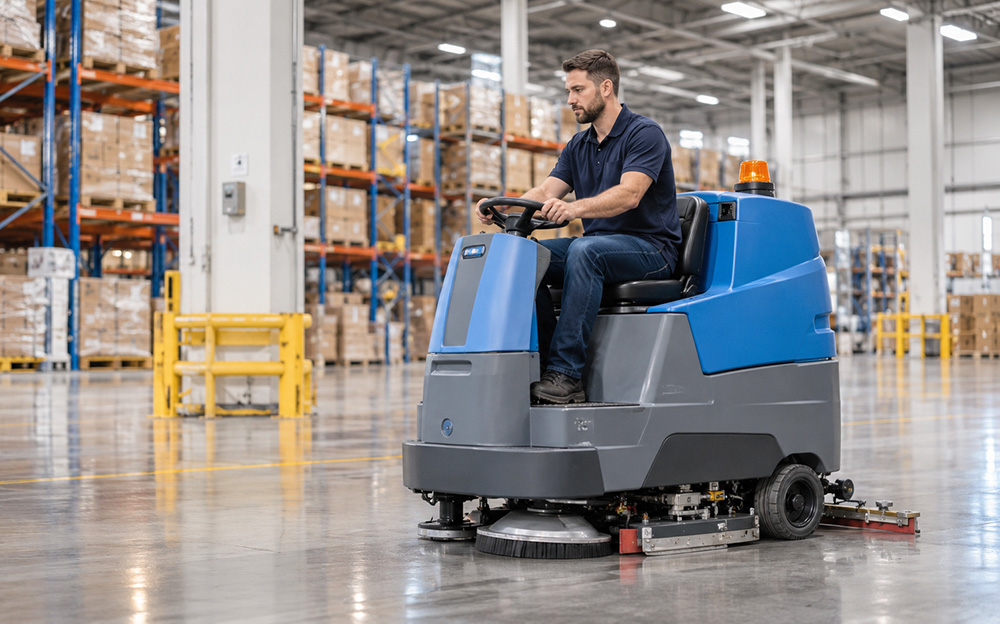
Ride-on floor scrubbers are essential cleaning machines in warehouses, factories, shopping centers, airports, and other large facilities. Their ability to cover extensive floor areas efficiently depends heavily on one critical component: the battery.
Unlike smaller cleaning machines, ride-on scrubbers must power several systems simultaneously, including traction motors, brush motors, vacuum motors, and water pumps. A suitable battery must therefore provide sufficient energy, stable power output, and reliable performance throughout demanding cleaning operations.
With advances in Lithiumbatterie technology, LiFePO₄ batteries are becoming an increasingly popular choice for commercial and industrial cleaning equipment. Understanding the available options can help operators reduce downtime, improve productivity, and control long-term operating costs.
1. Common Battery Types for Ride-On Floor Scrubbers
Three battery technologies are commonly considered for ride-on cleaning equipment.
Flooded Lead-Acid Batteries
Flooded lead-acid batteries remain a traditional choice because of their relatively low purchase price and established technology. However, they require regular electrolyte maintenance, are relatively heavy, and generally have a shorter service life when subjected to frequent deep discharge.
AGM and Gel Batteries
These sealed lead-acid batteries require less maintenance and offer good resistance to vibration. They are suitable for many commercial cleaning applications, although their charging speed, usable capacity, and cycle life remain limited compared with modern lithium alternatives.
LiFePO₄ Lithium Batteries
Lithium iron phosphate batteries offer several advantages for professional cleaning equipment:
- Higher usable energy compared with similarly rated lead-acid batteries.
- Longer cycle life, potentially reaching several thousand cycles under suitable conditions.
- Faster charging when supported by compatible chargers.
- Lower weight and reduced maintenance requirements.
- Stable voltage and integrated battery protection.
For machines operating daily or across multiple shifts, LiFePO₄ technology can provide significant long-term value despite its higher initial purchase price.
2. Key Specifications When Choosing a Battery
Choosing the right battery involves more than comparing ampere-hour ratings. Several technical factors directly affect cleaning performance.
Voltage Compatibility
Ride-on floor scrubbers commonly use 24V or 36V battery systems, although other configurations are available. The replacement battery must match the machine’s electrical architecture, motor controllers, and charger requirements.
Battery Capacity and Runtime
Capacity is measured in ampere-hours (Ah), while total stored energy is expressed in watt-hours (Wh) or kilowatt-hours (kWh).
For example, a 36V 200Ah battery provides 7.2kWh of nominal energy. Actual operating time depends on usable capacity and the machine’s average power consumption.
A scrubber operating with high brush pressure or frequent acceleration will generally consume more energy than one cleaning smooth floors under lighter conditions.
Discharge Performance
The battery must support the combined power requirements of the traction, brush, and vacuum motors. Continuous discharge capability and temporary peak current ratings should both be checked to prevent voltage drops or unexpected BMS protection shutdowns.
Physical Dimensions and Weight
Battery dimensions, terminal positions, connector types, and mounting arrangements must match the available battery compartment. Weight distribution is also important because it can influence machine stability and traction.
3. Why LiFePO₄ Batteries Are Well Suited to Floor Scrubbers
One of the biggest advantages of LiFePO₄ technology is its ability to support intensive daily operation.
Longer Service Life
LiFePO₄ batteries can achieve several thousand charge-discharge cycles depending on cell quality, operating temperature, depth of discharge, and charging conditions. This can reduce replacement frequency and improve the total cost of ownership.
Schnelleres Laden und Zwischenladen
Unlike traditional lead-acid batteries, LiFePO₄ batteries can support partial charging without the same concerns associated with repeatedly interrupting conventional lead-acid charging cycles.
This allows operators to recharge equipment during breaks or between cleaning assignments, provided the battery and charger support the required charging profile.
Consistent Power Delivery
LiFePO₄ batteries have a relatively flat discharge voltage curve, helping maintain consistent power throughout much of the operating cycle. This is particularly useful when brush motors and vacuum systems operate simultaneously.
4. Practical Applications: How Battery Selection Affects Daily Operations
The best battery configuration depends on the cleaning environment and operating schedule.
Case 1: Large Warehouse Cleaning
Consider a distribution warehouse where a ride-on scrubber operates for several hours each day across extensive concrete floors. The machine must continuously power its traction system, cleaning brushes, and vacuum motor.
An undersized battery may require additional charging breaks, interrupting cleaning schedules. A properly sized LiFePO₄ battery provides sufficient usable energy for the planned working period and can reduce unnecessary downtime.
Case 2: Shopping Centers with Multiple Shifts
Shopping centers often require cleaning before opening, during quieter periods, and after closing. Equipment availability is therefore especially important.
A lithium battery with suitable fast-charging capability can be recharged during scheduled breaks, helping support multiple cleaning periods without requiring a complete battery replacement between shifts.
Case 3: Industrial Facilities with Heavy Cleaning Loads
Factories may have concrete floors contaminated with dust, oil residues, or other industrial debris. Removing stubborn dirt can require greater brush pressure, increasing motor power consumption.
In this environment, battery selection should prioritize adequate continuous discharge current, sufficient capacity, and a reliable BMS. Simply choosing a battery with a high Ah rating is not enough; its discharge capability must also match the machine’s operating requirements.
5. The Importance of BMS Protection
A Battery Management System (BMS) is essential for the safe and reliable operation of Lithiumbatterien.
It monitors individual cell voltages, temperature, and current, providing protection against overcharging, over-discharging, excessive current, and abnormal temperatures.
Cell balancing also helps maintain consistent performance across the battery pack.
For ride-on floor scrubbers, the BMS should be configured according to the machine’s actual electrical requirements. Where supported, communication between the battery, charger, and machine controller can further improve system coordination.
6. How to Choose the Right Battery
Before purchasing a replacement battery or designing a new cleaning machine, consider the following:
- Confirm the required system voltage and battery capacity.
- Check continuous and peak discharge current requirements.
- Verify battery dimensions, weight, connectors, and installation space.
- Ensure the charger is compatible with the selected battery chemistry.
- Evaluate daily operating hours, cleaning intensity, and charging opportunities.
- Compare total ownership costs rather than focusing only on purchase price.
Abschluss
The right battery can make a significant difference to the productivity and operating costs of a ride-on floor scrubber. While lead-acid and AGM batteries remain practical options for some applications, LiFePO₄ technology offers longer cycle life, higher usable energy, faster charging, and more consistent power delivery.
RICHYE provides LiFePO₄ battery solutions for industrial applications, with customizable voltage, capacity, discharge performance, and BMS configurations.
Whether powering a commercial cleaning machine in a shopping center or a heavy-duty scrubber in an industrial warehouse, selecting a battery that matches the equipment and its working conditions is essential for reliable, efficient, and long-term performance.
Zuverlässige Lithium-Batterielösungen für Bodenreinigungsmaschinen