















From Cell Selection to BMS Integration: Essential Techniques for DIY Builders and Professional Battery Designers
Lithium battery packs are widely used in electric vehicles, portable power systems, energy storage equipment, and industrial applications. As demand for rechargeable battery solutions continues to grow, more people are exploring how to assemble their own battery packs using cylindrical lithium-ion cells. Spot welding is one of the most common joining methods for this type of battery assembly, offering a practical way to connect cells while minimizing prolonged heat exposure.
However, building a reliable battery pack involves much more than joining cells with nickel strips. Cell selection, welding parameters, electrical design, insulation, battery management, and quality testing all contribute to the final product’s performance and safety.
This guide explains the essential principles of lithium battery spot welding, highlights common assembly mistakes, and introduces the engineering considerations that can help DIY builders and battery buyers make better decisions.
1. Why Spot Welding Is Used in Lithium Battery Assembly
Resistance spot welding creates localized heat at the contact area between a metal strip and a battery terminal. Unlike conventional soldering, which can expose a battery terminal to sustained heat, spot welding uses short electrical pulses to form a connection.
For cylindrical lithium-ion battery packs, this method offers several practical advantages.
First, properly controlled welding can reduce the amount of heat transferred into the cell. This is important because excessive heat may damage internal components or accelerate battery degradation.
Second, spot welding can produce a stable electrical connection between cells and interconnecting strips. In high-current applications, connection resistance matters because electrical losses generate heat and reduce the efficiency of the battery pack.
Third, spot welding is suitable for repeatable production. With appropriate equipment and process controls, manufacturers can assemble battery packs containing multiple cells with consistent connection quality.
It is important to remember that a strong-looking weld does not automatically mean the entire battery pack is safe. The welding process is only one part of a complete battery design.
2. Choose the Right Cells Before Starting
Cell selection should be the first step in any battery assembly project.
Different lithium battery chemistries have different voltage characteristics, charging requirements, and safety considerations. Common examples include lithium iron phosphate (LiFePO4) and other lithium-ion chemistries. The battery chemistry must match the intended application and the specifications of the charger and BMS.
Before assembling a pack, consider the following factors:
- Cell chemistry and nominal voltage.
- Capacity and expected operating current.
- Internal resistance and cell condition.
- Cell manufacturer and traceability.
- Physical dimensions and terminal design.
- Required series and parallel configuration.
For example, a battery pack designed for a 48V-class LiFePO4 application requires a different cell arrangement and charging system from a conventional lithium-ion pack. The nominal voltage, full-charge voltage, and BMS configuration must be compatible with the selected chemistry.
Cells should also be matched appropriately. Differences in capacity, internal resistance, and state of charge can affect pack performance and balancing behavior.
Never use cells that show swelling, leakage, corrosion, damaged insulation, abnormal temperature, or other signs of physical or electrical damage. A questionable cell should be removed from the assembly process rather than treated as normal production material.
3. Selecting Nickel Strips and Welding Equipment
Nickel strips are commonly used to connect cylindrical cells because they offer suitable weldability and mechanical flexibility. However, the strip must be selected according to the current requirements of the battery pack.
Important specifications include:
- Strip material and electrical resistance.
- Thickness and width.
- Continuous and peak current requirements.
- Compatibility with the welding equipment.
- Mechanical layout and connection length.
Pure nickel and nickel-plated steel are not electrically equivalent. Two strips may look similar while having significantly different resistance and welding characteristics.
For higher-current battery packs, the interconnection system deserves particular attention. If the strip is too narrow or has excessive resistance, it may become a source of voltage drop and localized heating.
A suitable battery spot welder should provide controlled welding energy, stable electrode contact, and repeatable results. Adjustable pulse duration and current control are useful when working with different strip specifications.
The correct settings depend on the actual cell terminal, strip material, strip thickness, and welding machine. A setting that works for one battery pack may not be appropriate for another.
4. Preparing the Cells and Workspace
Good preparation helps prevent avoidable mistakes.
Before welding, inspect the cells individually. Confirm that the terminals and insulation are in good condition, and check that the cell voltage is appropriate for the intended assembly process.
The workspace should be clean, dry, and organized. Loose metal objects, tools, and conductive debris should be kept away from exposed battery terminals.
Use a suitable battery holder or welding fixture to keep the cells in the correct position. Cell movement during welding can cause inconsistent connections, damage insulation, or create accidental contact between conductive parts.
Polarity is another critical consideration. Confirm the positive and negative orientation of every cell before making electrical connections. A polarity error can lead to a short circuit or serious damage to the battery pack.
For commercial or repeated assembly work, documented work instructions and consistent inspection procedures can greatly improve reliability.
5. A Practical Overview of the Spot Welding Process
Step 1: Secure the Cells
Place the cells in a stable holder or purpose-built fixture. Ensure that the arrangement matches the intended series and parallel configuration.
The cells should remain stationary during welding, and the positive and negative terminals should be clearly identified.
Step 2: Position the Nickel Strip
Place the appropriate nickel strip over the cell terminal.
The strip should have sufficient contact area for the intended current and should be positioned without sharp bends or excessive mechanical tension.
Avoid placing conductive material where it could contact unintended terminals or the battery casing.
Step 3: Position the Electrodes
The welding electrodes must make firm and even contact with the strip.
Electrode alignment, pressure, and cleanliness all influence the consistency of the weld. Dirty or worn electrodes may produce uneven heating and unreliable connections.
Step 4: Apply Controlled Welding Energy
Use a welding process appropriate for the cell and strip specifications.
The goal is to create a secure connection while avoiding excessive heat, deformation, or damage to the terminal and insulation.
Increasing welding power does not necessarily improve weld strength. Excessive energy can damage the strip, cell terminal, or surrounding insulation.
For anyone without suitable equipment or experience, professional battery assembly is generally a safer and more practical option than experimenting on valuable cells.
Step 5: Inspect the Connections
After welding, inspect the connection points for visible defects.
Look for loose strips, excessive discoloration, damaged insulation, cracks, or inconsistent weld appearance. Also pay attention to unusual cell heating.
A visual inspection is useful, but it is not enough to establish complete weld reliability. Mechanical and electrical validation should be included during product development and quality control.
6. How to Evaluate Weld Quality
Reliable battery assembly requires more than checking whether the nickel strip appears attached.
Kiểm tra trực quan
Consistent weld appearance can help identify process variation. Significant differences between weld points may indicate unstable pressure, poor electrode contact, contamination, or unsuitable welding parameters.
Mechanical Testing
Controlled peel or pull testing can help determine whether the strip is properly bonded to the terminal.
The acceptance criteria should be established for the specific cell, strip material, and welding process. There is no single universal pull-force value that applies to every battery design.
Electrical Testing
A multimeter can help identify obvious wiring or continuity problems. For more accurate evaluation of connection resistance, dedicated low-resistance measurement equipment may be required.
In professional battery manufacturing, electrical testing is normally combined with visual inspection, mechanical validation, and documented process controls.
7. Common Mistakes That Reduce Battery Reliability
Several assembly mistakes can create unnecessary risks.
Using unsuitable cells: Damaged or poorly matched cells can affect the performance and safety of the finished pack.
Choosing nickel strips by appearance alone: A strip that looks thick enough may still have inadequate current-carrying capability.
Applying excessive welding energy: Too much heat can damage the terminal or cell.
Ignoring insulation: Exposed conductive surfaces can create accidental short circuits. Appropriate insulating materials and protective barriers are essential.
Connecting cells incorrectly: A wiring or polarity error can damage the battery pack and connected equipment.
Skipping final testing: A battery pack should not be considered ready simply because all cells have been connected.
These problems are especially important in high-current applications such as electric vehicles, industrial equipment, and energy storage systems.
8. BMS and Thermal Management Are Essential
A battery pack needs more than cells and interconnections.
A properly selected Battery Management System (BMS) helps monitor and manage important operating conditions. Depending on the design, this may include cell voltage, pack current, temperature, overcharge, over-discharge, and short-circuit protection.
The BMS must match the battery chemistry, series-cell count, current requirements, and intended application.
For example, a LiFePO4 battery pack requires a BMS designed for LiFePO4 operating characteristics. Using an incompatible BMS may result in incorrect protection thresholds or charging behavior.
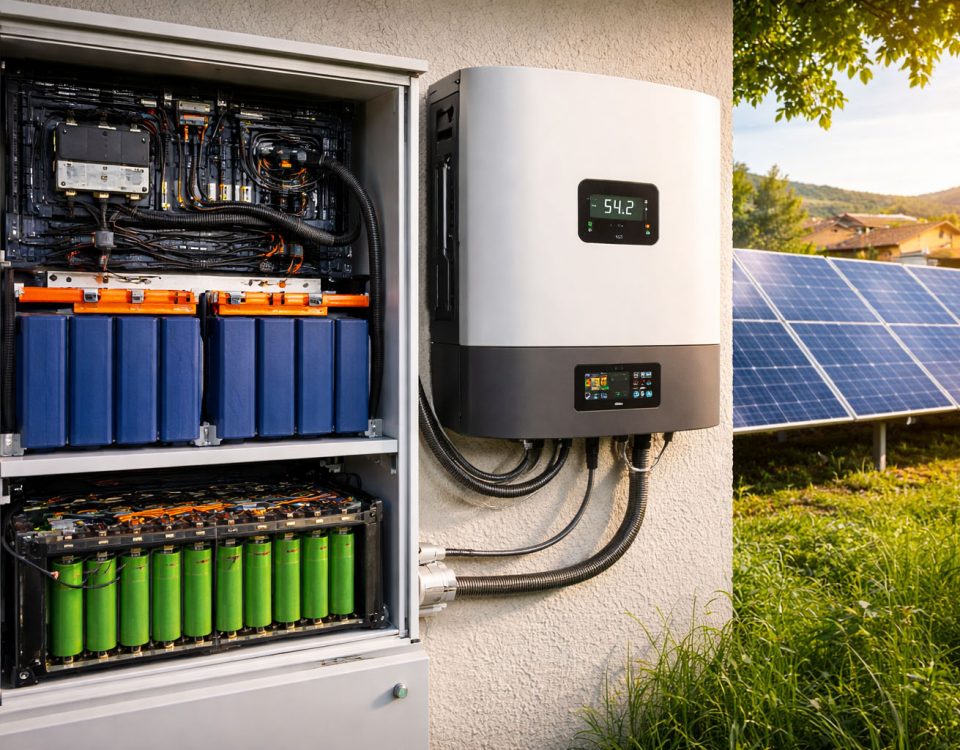
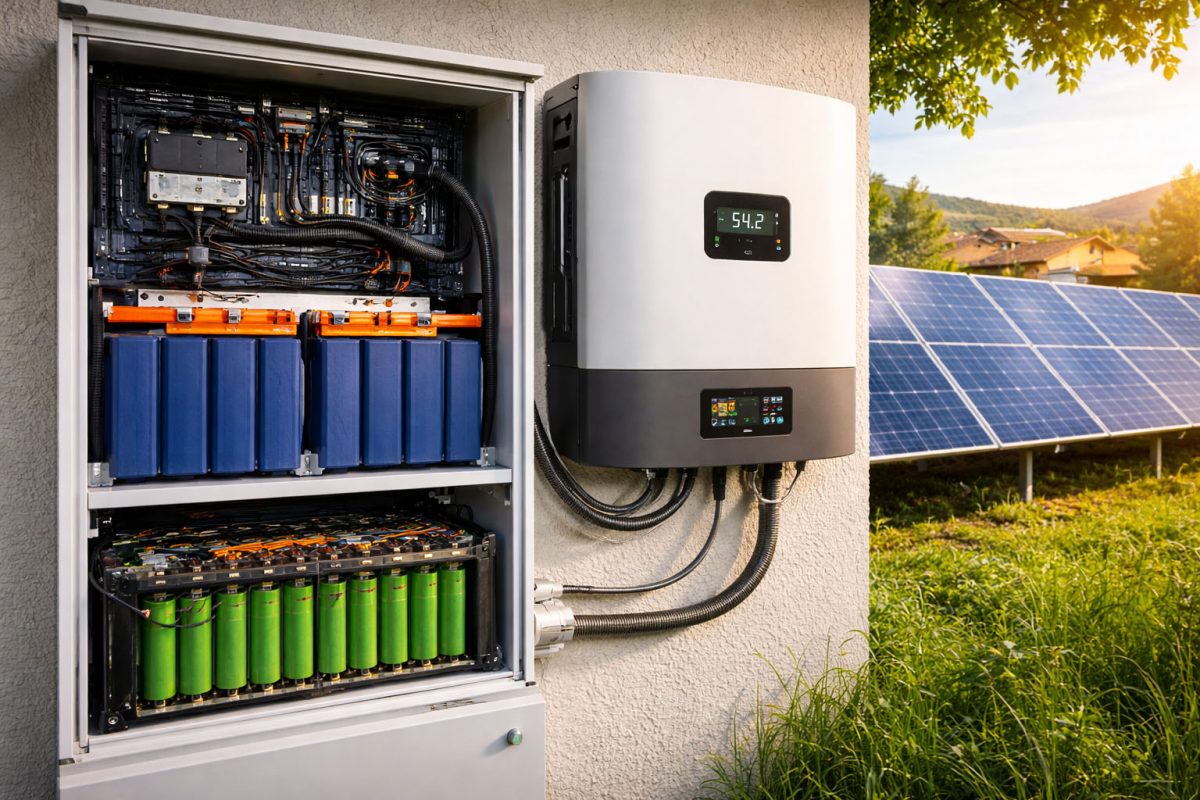
Thermal management is also important. High-current battery packs may generate heat during charging and discharge. The enclosure, internal layout, insulation, and connection design should support appropriate heat dissipation and prevent unwanted contact between conductive components.
For demanding applications, the complete battery system should be evaluated rather than focusing only on the cells.
9. When Professional Battery Assembly Makes More Sense
DIY battery assembly can be useful for learning and small projects, but it is not always the most practical solution.
For applications such as electric tricycles, forklifts, AGVs, AMRs, industrial vehicles, and energy storage systems, battery requirements can vary considerably. Voltage, capacity, peak current, operating environment, enclosure dimensions, and communication requirements may all need to be considered.
Professional battery manufacturers can help integrate these requirements into a complete battery solution.
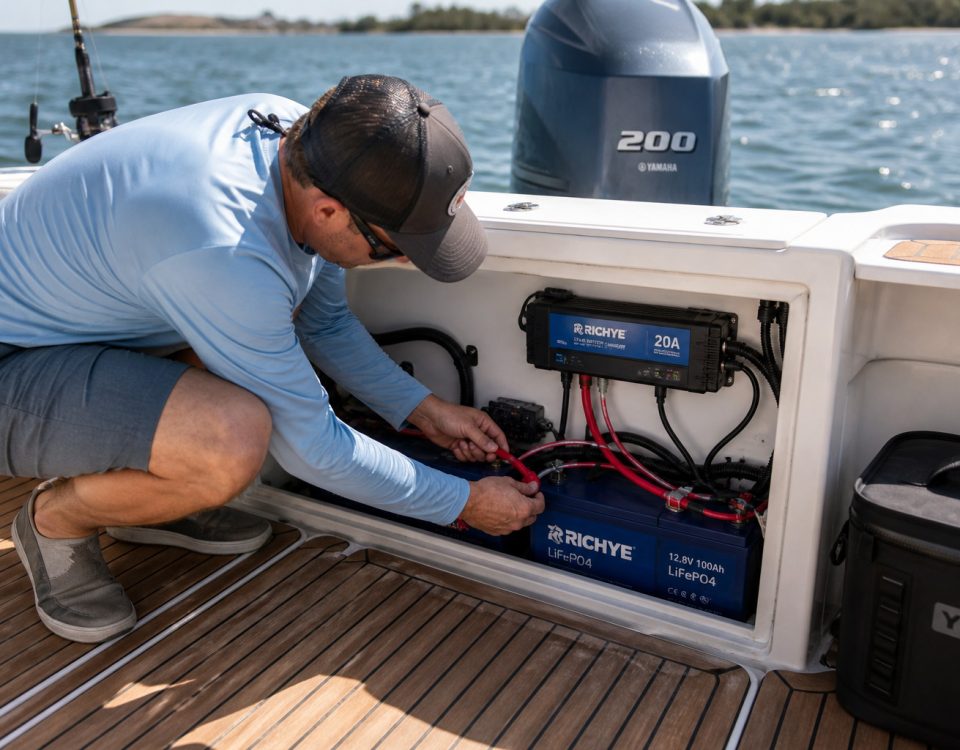
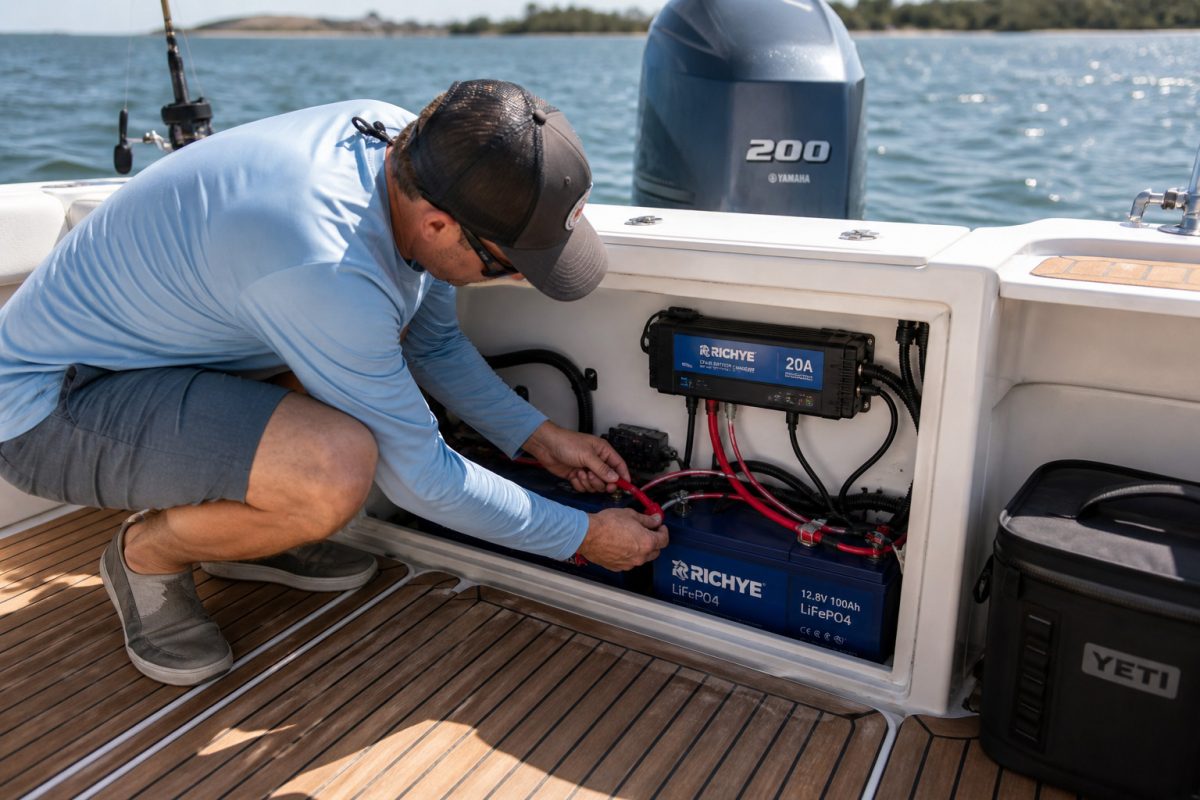
Tại RICHYE, we provide customized lithium battery pack solutions designed around the needs of different applications. Our engineering approach covers more than cell selection and welding. We can assist with battery configuration, enclosure design, BMS integration, wiring, and application-specific requirements.
For customers who do not want to assemble battery packs themselves, a professionally designed solution can simplify the process and reduce the challenges associated with equipment selection, cell matching, welding, and system integration.
A properly configured BMS, appropriate protection design, and suitable battery construction are important parts of a reliable finished product. Depending on the application, additional features such as communication functions, customized connectors, and monitoring capabilities may also be considered.
Phần kết luận
Xây dựng một lithium battery pack is an engineering task that requires careful attention to detail. Spot welding is an effective joining method for many cylindrical lithium-ion battery designs, but successful assembly depends on much more than creating a visible weld.
Suitable cells, correctly selected interconnection materials, controlled welding conditions, proper insulation, an appropriate BMS, and reliable quality testing all contribute to battery performance and safety.
For DIY builders, understanding these principles can help avoid common mistakes and improve project planning. For commercial users, working with an experienced battery manufacturer can make it easier to develop a solution that matches the actual requirements of the application.
Whether you are designing a battery for an electric vehicle, industrial equipment, or a custom energy storage system, the right approach is to treat the battery pack as a complete system—not simply a collection of connected cells.