



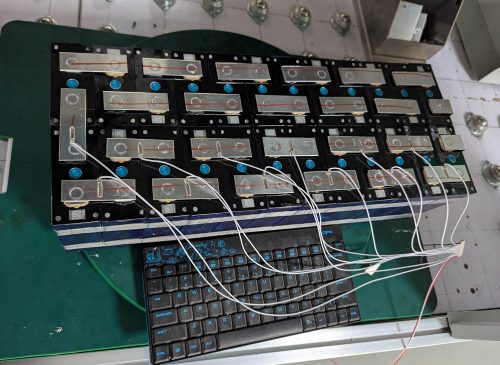
火花かはんだか?安全性を犠牲にすることなくリチウム電池を接合するための現代技術者ガイド
2026-02-23
Practical tradeoffs between spot welding and soldering — techniques, failure modes, and scalable practices for professional pack builders Joining cell terminals to metal tabs is a deceptively simple step with outsized impact on battery reliability, safety, and manufacturability. For builders of portable packs, energy-storage modules, and EV battery arrays, the choice between spot welding and soldering determines whether connections survive vibration, thermal cycling, and the rigors of service — or become the first weak link. This article walks through each method’s mechanics, benefits, and failure modes, then offers practical selection...
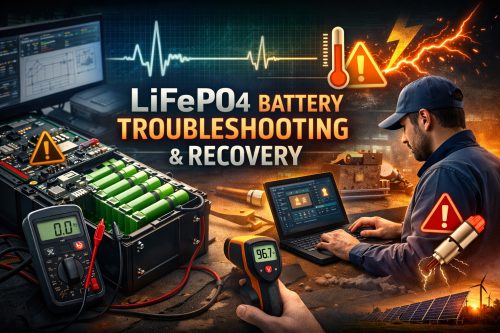
眠っている」LiFePO₄パックを復活させる:BMS診断と回復のための実践的で現場実証済みのガイド
2026-02-14
From 0V wake-ups to thermal management and fleet-grade telemetry — actionable steps for engineers and service teams Lithium iron phosphate (LiFePO₄) battery systems combine robust cycle life and intrinsic safety, but real-world failures often look alarming even when cells aren’t irreversibly damaged. In most cases the battery management system (BMS) is doing its job — isolating the pack to prevent permanent harm — and the correct response is diagnosis and controlled recovery rather than immediate replacement. This article distills field-tested workflows, practical troubleshooting sequences, and engineering best practices that help...
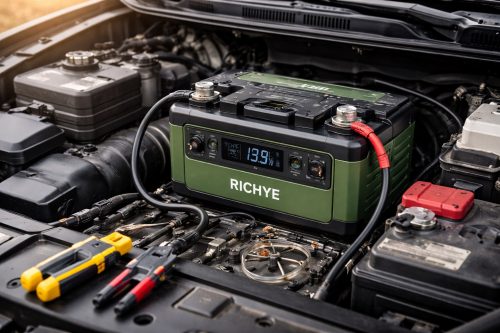
より長く、より安全に、よりスマートに: LiFePO₄をカーバッテリーとして使用するための実践ガイド
2026-01-26
Switching to LiFePO₄ (lithium iron phosphate) for automotive use is no longer an experimental hack — modern cells and modules bring clear advantages for many drivers: far longer cycle life, lighter weight, greater usable capacity, and superior thermal stability compared with lead-acid. At the same time, automotive systems present unique constraints — cold-start currents, alternator charging behavior, vehicle electronics sensitivity — that must be respected for a reliable, trouble-free installation. This guide distills the essential technical knowledge a buyer, installer, or advanced DIYer needs to select and integrate a LiFePO₄...
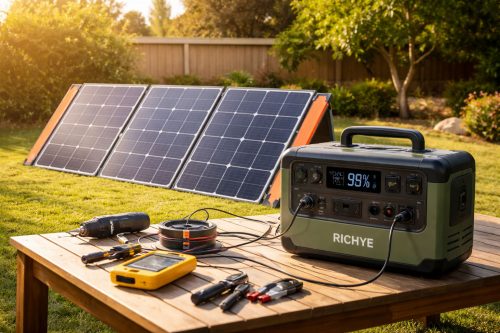
明るく静かな電力:初心者のための実用的なDIYソーラー発電所を作る
2026-01-13
Building a portable solar power station is one of the most empowering projects a homeowner, camper, or maker can tackle. With improvements in LiFePO4 battery chemistry, MPPT charge controllers, and high-efficiency inverters, you can assemble a compact, safe, and expandable power station that covers emergency backup, off-grid camping, and small-appliance power needs—without paying top dollar for a sealed commercial unit. This guide walks through the practical choices, safety considerations, and step-by-step assembly approach for a beginner-friendly 12V solar generator, using modern components and industry best practices. Throughout the article, when...
ワット対VA:現代の電気システムを左右する隠れた電力計算
2025-12-29
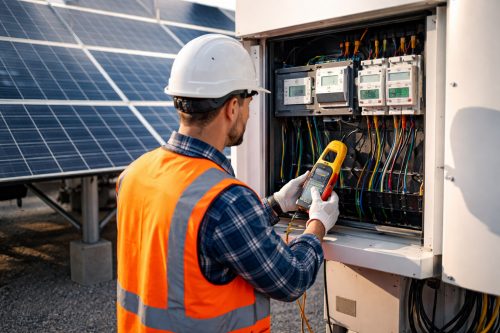
Understanding the difference between watts (W) and volt-amperes (VA) is essential when designing or installing electrical and solar systems. Too often, professionals treat watts and VA as interchangeable — a mistake that leads to undersized inverters, overheating conductors, nuisance tripping, or unexpected expenses. This article explains the math, shows practical examples, and gives field-tested rules of thumb so you can choose the right equipment the first time. Real power, apparent power, and power factor — the essentials Watts (W) measure real power — the energy converted to useful work (heat,...
電圧、容量、制御:直列・並列配線による安全で効率的なバッテリーパックの設計
2025-12-12
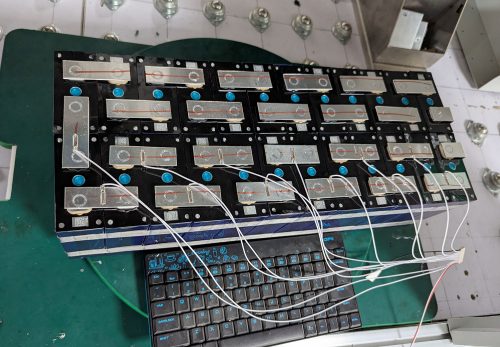
Practical engineering guidance for choosing wiring topology, sizing conductors and protections, and building reliable battery banks for real-world systems Connecting batteries is more than a wiring exercise — it is the single design decision that defines system voltage, usable energy, charging behavior, and operational risk. Whether you are assembling a battery bank for a solar array, an EV drive pack, an industrial backup system, or a fleet of mobile machines, the choice between series and parallel wiring (or a combination of both) should be backed by electrical fundamentals, safety engineering,...
火花を止める:LiFePO₄バッテリーシステムの熱暴走を防ぐ実践的戦略
2025-11-29
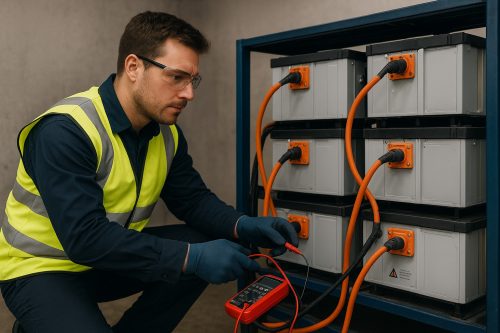
Thermal runaway is the single failure mode battery engineers fear most: once a cell starts self-heating uncontrollably, the event can cascade through a pack and produce fire, toxic gases, severe equipment damage, or worse. LiFePO₄ (LFP) chemistry is inherently more thermally stable than many high-energy lithium formulations, but “more stable” is not “invulnerable.” Preventing thermal runaway in real installations requires a layered strategy that spans cell chemistry and design, pack architecture and cooling, battery management systems, test standards, and disciplined operational practices. This article explains the root causes, early-warning signals,...
フォークリフト・バッテリーの交換時期 - フリート管理者のための実践的、技術的ガイド
2025-11-12
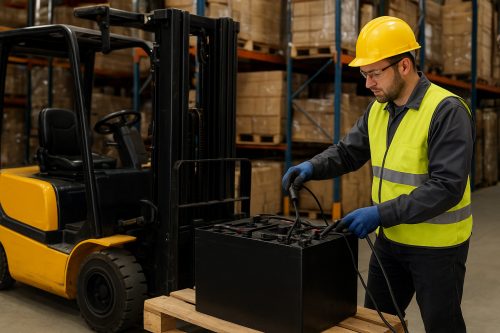
A forklift battery is one of the most expensive and mission-critical components in a material-handling fleet. Replacing it too early wastes capital; replacing it too late risks downtime, safety incidents, and higher long-term cost. This article explains the practical signs, technical thresholds, testing methods, and best practices that tell you when a forklift battery should be retired — plus actionable steps to extend service life before replacement becomes necessary. Advice below draws on current industry practice and battery-science fundamentals so you can make informed, defensible replacement decisions for your operation....

ロボットを支えるバッテリー:自動倉庫の次の波を支える電力
2025-11-03
The logistics industry is entering a decisive decade. As e-commerce expectations continue to compress delivery windows and warehouse operations demand ever-higher throughput and accuracy, automation is no longer an optional efficiency play — it has become a strategic necessity. At the heart of that transition are autonomous guided vehicles (AGVs) and autonomous mobile robots (AMRs): flexible, scalable movers whose performance and operating cost are tightly coupled to one component often treated as commodity — the battery. This article examines how current battery technology supports automation, why companies should treat battery...